
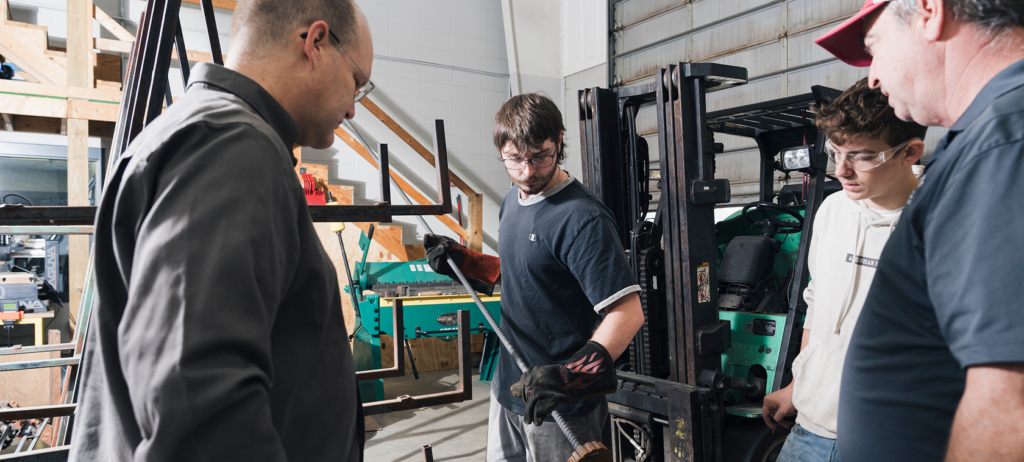



A student-led business is a real or simulated enterprise that is designed, managed, and operated primarily by students.
Different schools’ programs focus on different industries, but to fulfill the State of Indiana’s work-based learning requirements, each business must fall into one of three categories:
sells goods or services to customers on school grounds with students managing daily operations, finance, production, marketing, and customer service.
is a school-based environment that replicates the tools, roles, and expectations of a workplace. Students carry out specific tasks and might interact with clients but are not required to operate as a fully
functioning business.
is a student-created and -led business venture, such as a landscaping service, coffee cart, apparel brand, or repair business. Students design, launch, and manage
the enterprise.
In Ascend’s 2025 statewide survey, 59 of the 60 schools operating student-led businesses reported that their SLB is located within the school building, career center, or school grounds. This on-campus delivery makes SLBs available to far more students than employer-based placements by reducing barriers such as the need to leave campus, rearrange their schedules, or sacrifice extracurriculars. “Our kids are in everything,” says one principal. “The business lets them work during school without having to give anything up.”
With SLBs, students enjoy exploring varied interests and career paths by sampling multiple roles within the business. In the 2025 SLB survey, 36 of the 60 schools operating SLBs reported that students regularly rotate across different functions. Students discover their strengths and preferences, and educators report that this is particularly powerful because the lesson is grounded in real responsibilities.
Because SLBs require students to operate within a real or simulated work environment, the acquired skills align with workplace expectations. Students practice communication, collaboration, time and task management, customer service, and problem solving in environments where their work has meaningful consequences. Jody French, Director of Career and Technical Education (CTE) / Work-Based Learning (WBL) at Perry Central High School, talks about a student who struggled in school but did well at Commodore Manufacturing, which provided him with enough skills to win him a welding internship with a local company. When the business wanted to hire him full-time, the school helped him adapt his schedule to finish high school at night. Before he graduated, he was working an $80,000-a-year job.
In addition to building skills, SLBs foster a sense of belonging, purpose, and identity that can lead to broad success. The Network for Teaching Entrepreneurship reports that 94% of students in its entrepreneurship programs were on track to graduate, compared to less than 80% of their peers. “We pull them in,” one SLB teacher says. “Whether it’s the valedictorian or the kid who is struggling, there’s a place for them.” Another adds, “Students who didn’t see themselves fitting anywhere find their place here.”
Because SLBs operate on campus and typically within the school day, they allow schools to provide career-connected learning without transportation, coordination with employers, or class-schedule changes. This means SLB experiences are available to a larger, more diverse group of students and can more easily scale up to meet demand.
SLBs are designed to sustain themselves. While schools might require startup funds to launch an enterprise, the enterprise’s revenue often can cover ongoing operations. In Ascend’s 2025 survey, 14 schools said they were able to operate SLBs for only about $5,000 to 10,000 a year, and another 14 said they spent less than $5,000 a year on their SLBs. “Once we got started, the business became self-sustaining,” says a business teacher at one Indiana high school. A manufacturing instructor at another school goes so far as to say that one of the machines used by the SLB “prints money.” “The margins on it are crazy good,” he adds.
SLBs make academic, technical, and employability skills come to life for students by putting them in authentic contexts. Educators can see growth and assess learning in real time as students use financial math to track revenue, practice communication while serving customers, apply technical skills in production planning, and develop teamwork and problem-solving skills by managing operations. “Students are evaluated on actual work, not worksheets,” says one business and marketing teacher. “We treat this like work …The learning happens because it is real,” adds a manufacturing teacher.
With SLBs, employers can meaningfully support student learning and workforce development, even if they don’t have the capacity or positions to employ youth under 18 directly in their workplaces. Mentoring, feedback, project support, equipment donations, and collaborations make involvement more feasible, even for smaller employers, those in rural communities, or ones with strict worksite regulations. A business teacher underscores the impact businesses can have with this model, saying, “They don’t have to host students onsite to make a real difference.”
SLBs give employers the opportunity to prepare workers while they’re still in high school, helping to shape young people’s skills and mindsets and prepare them to enter the workforce familiar with industry vocabulary, expectations, and workflows. This also can give employers access to potential part-time, summer, or full-time hires. “Employers aren’t just sponsoring,” says one district leader. “They are building their future workforce.”
By participating in SLBs, employers become visible and valued contributors to local economies and community vitality, help young people see viable futures close to home, and win support from the community. One school board member notes, “The community sees this as theirs. They support it because they are part of it.”

Ready to learn more about student-led businesses? Our report shows how schools have successfully created accessible, impactful, and relevant work-based learning experiences that actively engage students and build real-world skills.
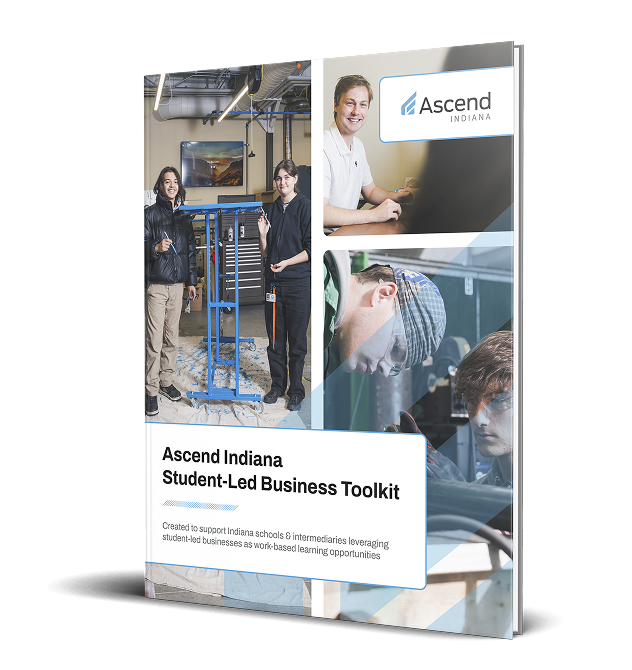
Take the next step from insight to implementation. Download our Student-Led Business Toolkit and bring student-led businesses to life as scalable, high-impact work-based learning experiences.
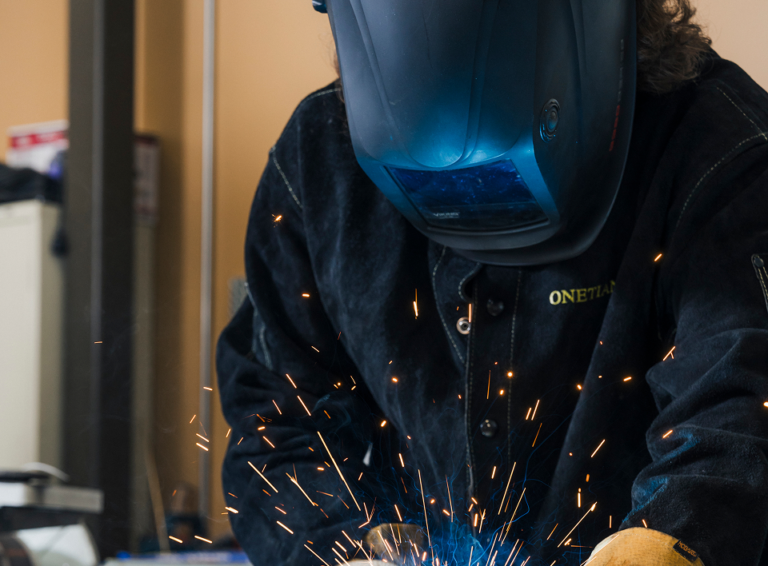
Bend Manufacturing pushes the boundaries of what a student-led business can be. Students aren’t just learning advanced manufacturing—they’re applying it alongside industry and research partners, delivering work that reaches as far as NASA.
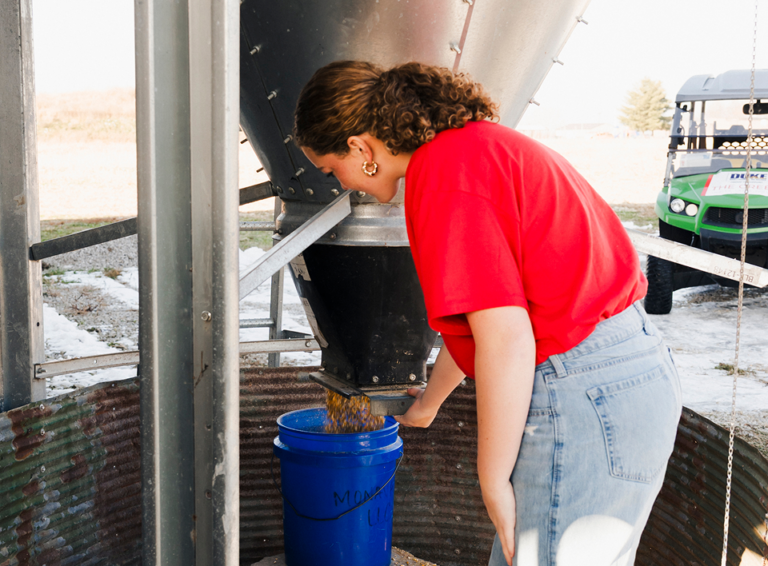
At Indian Creek High School, Creek Cattle Company shows what’s possible when students take the lead. From managing a full-scale cattle operation to supplying their own cafeteria, students are building real skills and delivering real results.
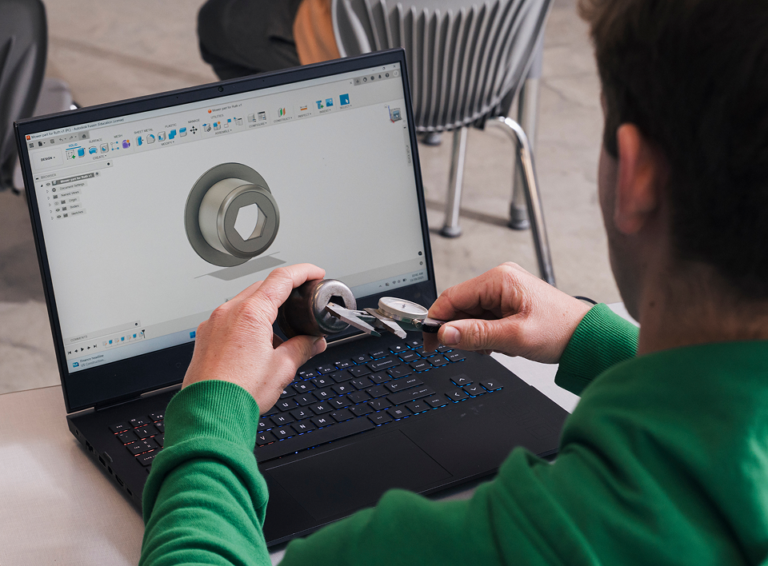
What happens when students don’t just simulate business, but actually serve real customers? At Perry Central High School, Commodore Manufacturing shows how student-led businesses can produce high-quality work for industry partners while building a workforce ready for day one.
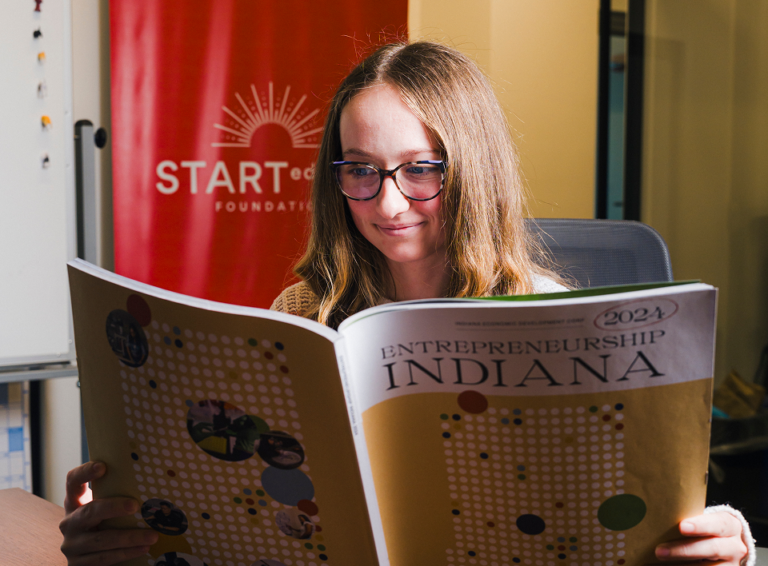
Student-led businesses don’t always start in a classroom, they can start with an idea. The STARTedUP Foundation is helping thousands of students turn problem-solving into entrepreneurship, showing how student-led ventures can spark purpose, innovation, and real-world opportunity.
Chambers of commerce, workforce boards, and education service centers act as key intermediaries supporting K–12 work-based learning across Indiana. Partnering with an intermediary can help you design and implement meaningful work-based learning opportunities with ease and impact.
Find a regional partner to help you create work-based learning opportunities
Indiana workforce data and insights
Workforce insights that inspire and educate
Classroom learning combined with real, on-the-job training
A real or simulated business operated primarily by students to gain hands-on, work-based learning experience.
Find a regional partner to help you create work-based learning opportunities